Intersections
Give way rules, roundabouts, stop signs, turning, rail and tram crossings.
Key Areas You'll Cover
Overview
At a Glance: Around half of all crashes on NSW roads happen at intersections. The DKT tests whether you know who gives way in each situation: at intersections without signs, at T-intersections, at Stop and Give Way signs, at roundabouts and when turning. Learn the handful of core rules below and most of these questions become simple.
Intersections are one of the largest topics in the road safety part of the DKT, and many questions use diagrams. Read each diagram carefully. Work out which road each car is on and which way it’s going, then apply the rule. Who arrived first never decides who goes.
Intersections Without Signs or Lights
When there are no signs, lights or roundabout, these rules apply:
- Going straight: give way to vehicles approaching from your right.
- Turning left: give way to vehicles on your right, and to pedestrians crossing the road you’re turning into.
- Turning right: give way to:
- vehicles approaching from your right;
- oncoming vehicles going straight ahead or turning left;
- pedestrians crossing the road you’re turning into.
- Both turning right from opposite directions: pass in front of each other, turning at the same time.
Key Fact: If you’re turning right, you give way to oncoming traffic. It’s one of the most-tested rules on the DKT and one of the most common crash types in real life.
T-Intersections
If the road you’re on ends at a T-intersection, you must give way to all vehicles on the continuing road, from both left and right, unless a sign says otherwise. This applies whether those vehicles are going straight or turning.
Watch for a continuing road that bends around a corner. It’s still the continuing road, so a car following that bend has priority over a car turning off it.
Stop and Give Way Signs
| Sign or line | What you must do |
|---|---|
| Stop sign or continuous Stop line | Stop completely, as close to the line as you can, every time. Then give way to vehicles in, entering or approaching the intersection. |
| Give Way sign or broken Give Way line | Slow down and be ready to stop. Give way to vehicles in, entering or approaching the intersection. You only stop if you need to. |
| Stop sign with no line | Stop before the intersection, as close to it as practical. |
| Lines with no sign | The line has the same meaning as the matching sign. |
There are two exceptions to remember:
- If two drivers face Stop or Give Way signs opposite each other, the driver turning right gives way to the oncoming driver turning left or going straight.
- A driver making a U-turn must give way to everyone, even if you’re the one facing the Give Way sign.
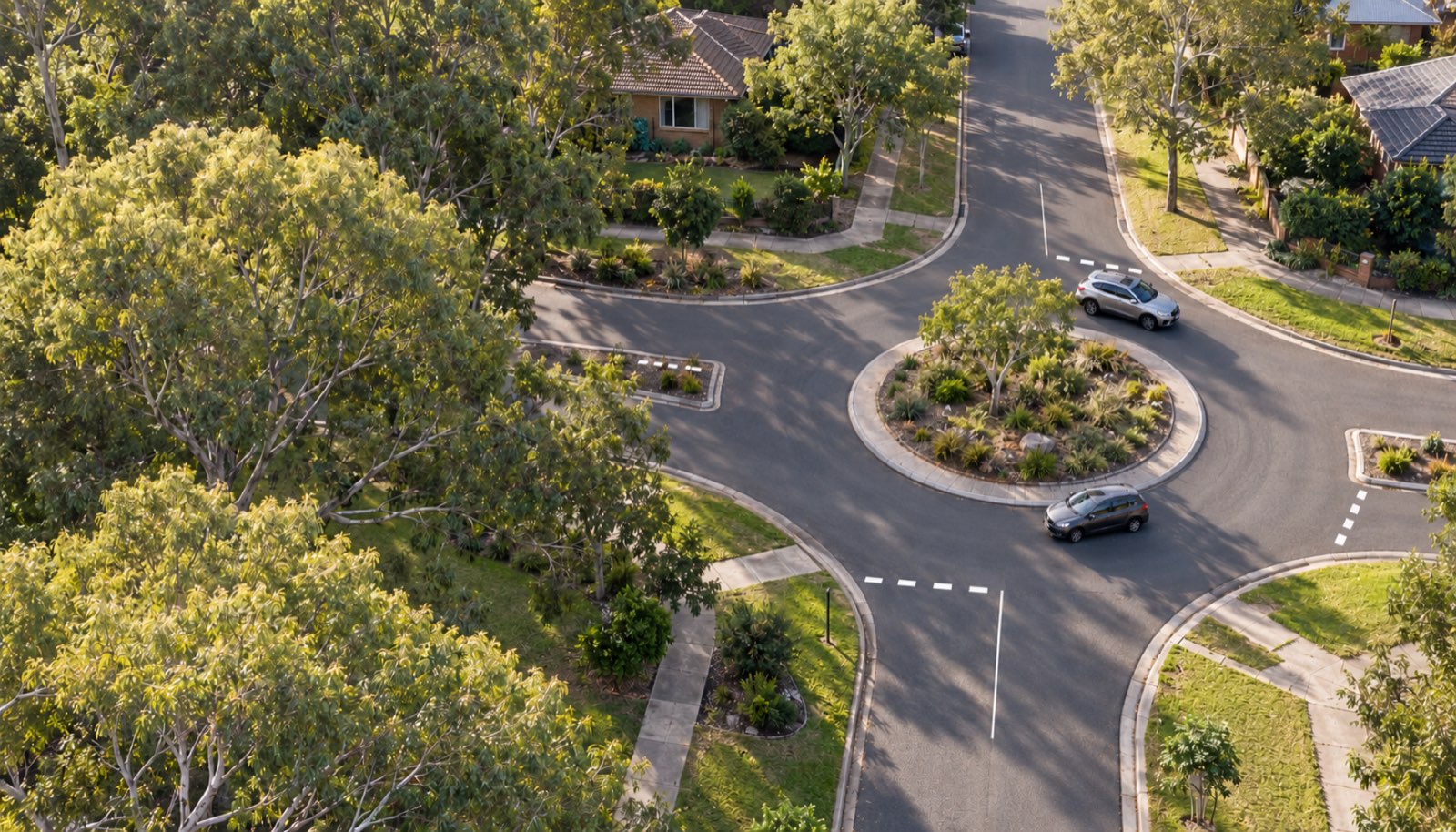
Roundabouts
- Entering: slow down or stop and give way to all vehicles already on the roundabout. That includes vehicles that entered from your left or from opposite you, not just those on your right.
- Turning left: indicate left on approach, use the left lane (unless arrows say otherwise) and keep indicating until you’ve left.
- Going straight: don’t indicate on approach. Indicate left just before your exit, if practical.
- Turning right or making a U-turn: indicate right on approach, use the right lane (unless arrows allow others), then indicate left as you exit, if practical.
- Changing lanes: plan to avoid it. If you must, cross only a broken line, indicate and give way.
Bicycle riders may turn right from the left lane of a multi-lane roundabout. When they do, they must give way to vehicles leaving the roundabout, so watch for riders in that lane.
DKT Tip: Roundabout diagram questions often turn on where you start indicating left when going straight. You signal just after passing the exit before yours, never on approach.
Turning and Lane Position
- Turn left from the left lane and right from the right lane, unless arrows allow other lanes. Stay in the same lane through the turn.
- Always indicate, even if you can’t see anyone.
- While waiting to turn right, keep your front wheels pointing straight ahead. That way the car can’t angle or roll into the path of oncoming traffic.
- In a slip lane, give way to traffic on the road you’re entering, to oncoming vehicles turning right into it, and to pedestrians.
- For a U-turn, start from the lane closest to the centre, have a clear view and give way to all vehicles and pedestrians. U-turns at traffic lights are banned unless a “U-turn permitted” sign is shown.
- Don’t enter an intersection unless there’s room for your car on the other side, even on a green light. Never stop in a “Keep clear” area.
If police or a traffic controller are directing traffic, follow their signals. They override lights, signs and the usual give way rules.
Pedestrians at Intersections
Whenever you turn left or right, you must give way to pedestrians crossing the road you’re turning into. This applies with or without signs or lights. A flashing red pedestrian signal stops people from starting to cross, but anyone already crossing can finish, and you must wait for them.
Railway Level Crossings and Trams
- At a Stop sign at a level crossing, stop every time, then look and listen both ways.
- At flashing red lights or lowered boom gates, wait until the lights stop and the gates are fully up. A second train may be coming.
- Never enter a crossing unless you can clear it completely on the other side.
- Trams can’t swerve and take a long time to stop. Never turn in front of one or queue across the tracks.
Try the Intersections quiz, and see our guide to NSW give way rules at intersections and roundabouts.
Common Mistakes on the DKT
- Giving way only to the right at a T-intersection. You give way to everyone on the continuing road.
- Giving way only to the right at a roundabout. You give way to everyone already on it.
- Rolling through a Stop sign. A full stop is required every time.
- Thinking the first car to arrive goes first. Arrival order never decides right of way.
- Indicating left on approach when going straight at a roundabout. Only indicate as you exit.
- Forgetting pedestrians when turning. They have priority on the road you’re turning into.
Ready to test your Intersections knowledge?
All 54 intersections questions are in the app. Meanwhile, try the free mock DKT.
Get The Learners Test app
All 457 questions across 11 topics, full 45-question mock tests, flash cards and progress tracking.